US Green Card Suspension: What It Means for Indian Techies at TCS, Infosys, Microsoft and Others
I’ll fetch the full article from that URL.
I’ll fetch the full article content.
By Aniruddha Dhar | The Indian Express | October 9, 2026
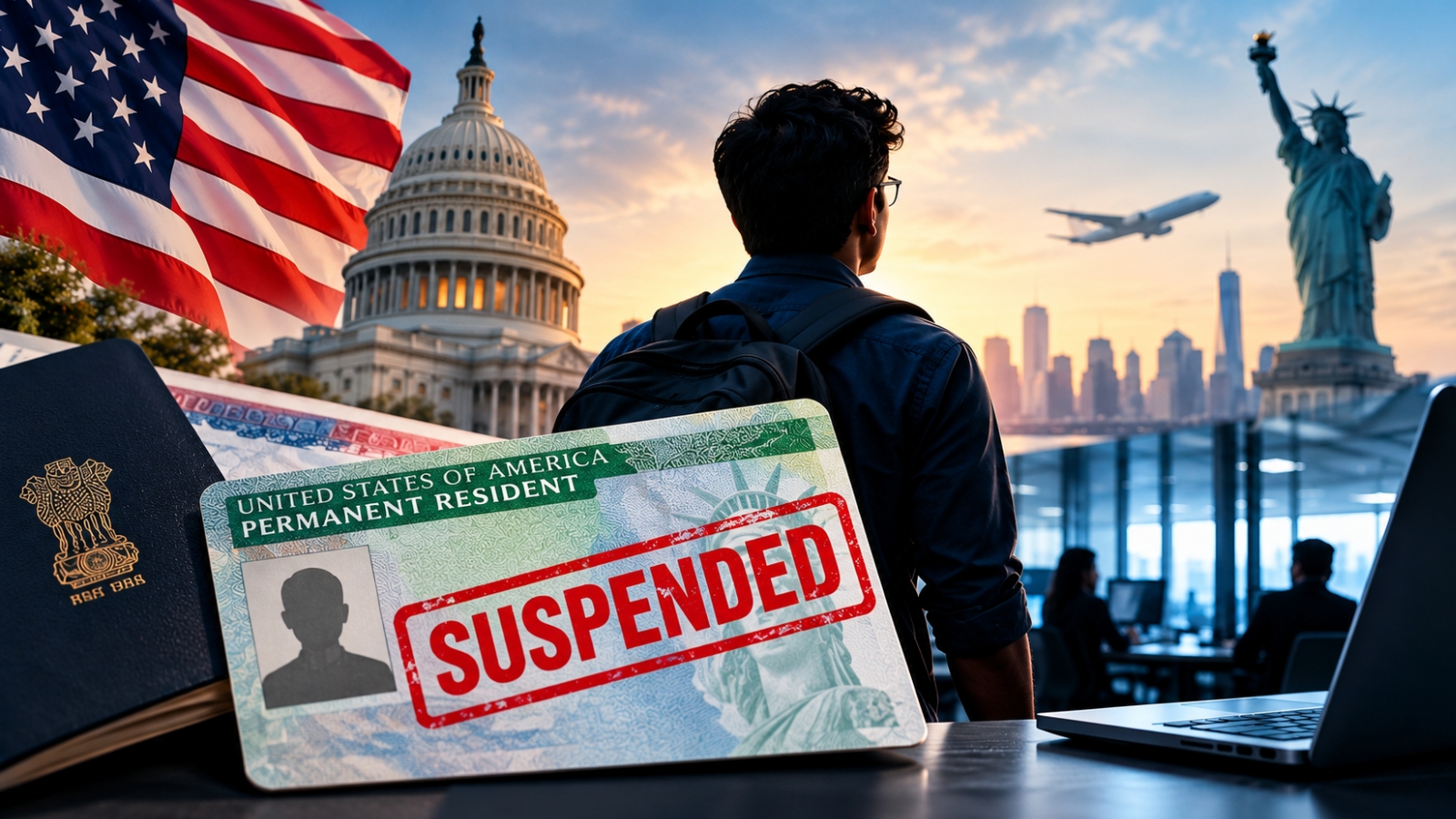
The Trump administration’s decision to suspend eight major technology companies from the US Permanent Labour Certification (PERM) programme is unlikely to cause an immediate financial hit to Indian IT firms, but analysts warn it could create long-term uncertainty for workers and the sector.
The US Department of Labour has announced it will not accept new or process pending PERM applications involving eight companies: Microsoft, Adobe, Cognizant, Infosys, Tata Consultancy Services (TCS), Wipro, HCL Technologies and Capgemini.
US Vice President JD Vance accused these firms of abusing the visa system to replace American workers and undercut wages, leading to the suspension.
PERM is a crucial step in the employer-sponsored green card process, requiring companies to prove there are no qualified US workers for a role before hiring a foreign worker.
The suspension does not automatically cancel existing H-1B visas. However, it could disrupt the green card pathway for employees whose employers have initiated or were preparing to initiate PERM applications, potentially leading to significant delays.
Indian professionals working in the US on H-1B visas who are relying on their employers to sponsor their green cards are most likely to be impacted. The extent of the disruption will depend on how long the suspension remains in place and how pending cases are handled.
Analysts say the immediate financial impact on Indian IT companies will be limited for several reasons:
- Minimal reliance on PERM: According to ICICI Securities, Indian IT firms accounted for less than 2 per cent of all PERM applications filed between October 2024 and September 2025.
- Reduced visa dependence: Nasscom has stated that firms have significantly reduced their reliance on H-1B visas in recent years, while expanding local hiring in the US.
- Few workers use the route: Relatively few H-1B holders transition to permanent residency through PERM, according to Nasscom.
- TCS downplays impact: TCS has stated it expects no impact on its workforce strategy or client engagements, citing single-digit PERM applications over the past two years.
Despite this, ICICI Securities noted the move is negative for Indian IT stocks in the near-to-medium term due to sentiment and long-term talent retention concerns. Prolonged uncertainty could also increase attrition among US-based workers.
- Indian government: The Ministry of External Affairs criticised the remarks against Indian professionals, calling them “unwarranted” and emphasising that Indian workers are highly educated, skilled contributors to the US economy and innovation ecosystem.
- Nasscom: Defended the industry, pointing to increased local hiring and reduced dependence on the visa system.
- US lawmakers: Democratic Congresswoman Pramila Jayapal slammed the decision as taking a “hammer to the legal immigration system.” In response, Vance questioned whether “socialism” meant ensuring megacorporations have a never-ending flow of cheap labour.
- Markets: India’s IT index rose 3 per cent on Friday, led by TCS following strong second-quarter results. However, the sector has still fallen around 25 per cent this year, compared to a 14 per cent decline in the benchmark index.
This suspension adds another layer of regulatory uncertainty for India’s $315-billion IT industry, which is already grappling with AI-led disruption and tightening US immigration rules. Analysts warn it could lead to higher hiring and compliance costs as companies increasingly rely on US-based talent and subcontracting, potentially weighing on margins in the long run.
(With inputs from agencies)
About The Author

Related Stories
-
 On Christmas Eve 2018, cracks forced residents from Sydney’s Opal Tower; after nearly eight years of repairs, relocations, a class action and two legal cases, the complex has been declared defect-free
 -
Free Soul: A UK founder and his mother burned through £15,000 developing a vegan supplement, then fitted kitchens to fund their first stock; Free Soul now turns over £55 million a year and employs 50
-
Ugandan communities planted 4,053 trees beside one of Africa’s great rainforests; now the new forest is rebuilding a damaged wildlife buffer
-
Singapore covered a reservoir with 122,000 floating solar panels; it now powers 5 water-treatment plants and cuts 32,000 tonnes of CO₂ every year
-
US slaps import ban on Canadian alcohol, motorbikes and other goods